
Views: 0 Author: Site Editor Publish Time: 2026-07-27 Origin: Site
You just returned from a rainy neighborhood walk. Your dog bounds inside, tracking muddy prints across the floor. Naturally, you reach for the closest cleaning supply: a convenient pack of Baby Wipes. We have all faced this exact scenario. Convenience often drives our daily grooming choices. However, is this quick fix actually safe for your furry best friend?
While a single emergency swipe probably will not cause severe harm, veterinary dermatologists explicitly advise against making this a regular habit. Human products are formulated specifically for human biology. Applying them to pets introduces hidden and unnecessary dangers to their skin barrier.
This article details the specific biological risks of using cross-species grooming products. You will learn exactly why human formulas clash with canine skin. We will also provide a comprehensive framework for evaluating and selecting safe, dog-specific alternatives. Read on to ensure your daily cleaning routines support your dog's long-term health and comfort.
Canine pH Discrepancy: Human baby wipes are formulated for acidic human skin (pH ~5.5), which can destroy a dog's more neutral/alkaline skin barrier (pH 6.2–7.4).
Ingestion Risks: Dogs instinctively groom themselves; residual chemicals from baby wipes (fragrances, propylene glycol) pose toxic ingestion risks.
The Right Tool for the Job: Safe alternatives require specific material substrates and dog-formulated solutions (e.g., chlorhexidine for sanitization, oatmeal/aloe for sensitive skin).
Purchasing Standard: When shortlisting dog wipes, verify they are alcohol-free, unscented (or naturally derived), and explicitly pH-balanced for canines.
Mammalian skin relies on a protective layer called the acid mantle. This thin film of natural oils and sweat serves as a biological shield. It keeps moisture locked inside while blocking environmental pathogens. Human skin requires a highly acidic mantle. Our skin pH normally hovers around 5.5. Manufacturers formulate human wipes specifically to match and support this acidic environment.
Canine biology differs drastically. A dog's skin functions at a much more neutral or alkaline level. Their epidermal pH typically ranges between 6.2 and 7.4. Applying acidic human products to alkaline canine skin causes immediate micro-level damage. The acidic liquid strips away protective sebum. It creates invisible micro-abrasions across the epidermis. Furthermore, stripping these natural oils creates an unbalanced surface environment. Yeast and harmful bacteria thrive on compromised canine skin. Routine use of human products frequently triggers painful yeast infections and severe bacterial dermatitis.
Human babies do not instinctively lick themselves clean. Dogs do. When you wipe a dog's paws, snout, or genital area, they will almost always groom that exact spot afterward. This natural canine behavior introduces a massive ingestion risk.
Most commercial wipes leave a lingering layer of moisture and active ingredients on the skin. Dogs ingest these topical liquids directly during their post-walk grooming routines. Their digestive systems must then process synthetic compounds formulated only for external human use. Additionally, canine paw pads possess highly vascular tissue. Transdermal absorption occurs rapidly. Chemicals soak through the footpads and enter the bloodstream. You must evaluate any product applied to a dog's coat as a product they will eventually consume.
Pet owners often fall victim to clever marketing assumptions. We assume "gentle for human babies" automatically means "gentle for animals." This represents a dangerous false equivalency. A product labeled hypoallergenic for a human infant still targets an acidic skin profile. It still utilizes human-grade preservatives. Gentle human skincare actively damages canine health over time. You must separate human safety standards from veterinary safety standards.
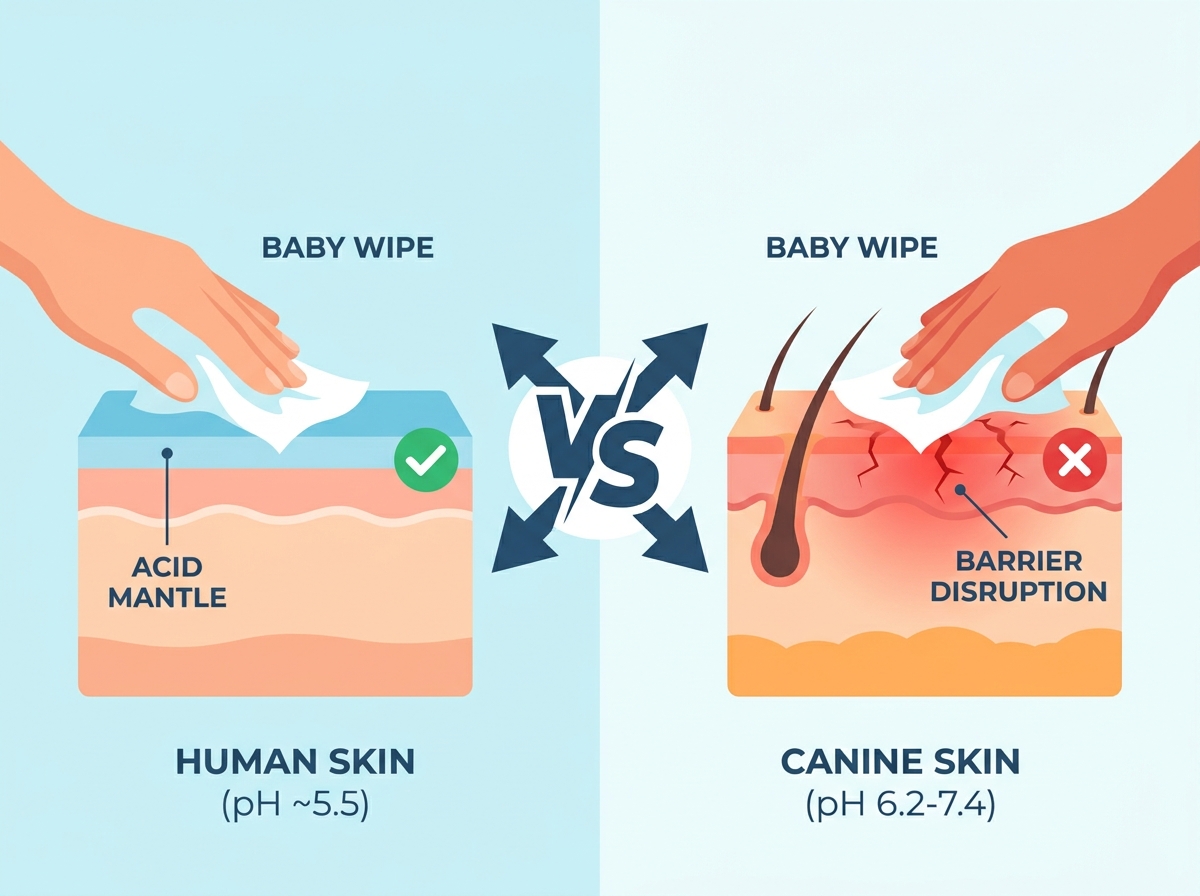
Checking the ingredient list on a standard pack of Baby Wipes reveals multiple compounds hazardous to pets. While regulatory boards deem these chemicals perfectly safe for human infants, veterinary experts strongly warn against exposing dogs to them.
Manufacturers heavily rely on propylene glycol to retain moisture. This synthetic liquid additive keeps the non-woven fabric wet inside the packaging. While human skin tolerates it well, it acts as a toxin to pets if ingested in sufficient quantities. Because dogs lick their damp paws, daily exposure to propylene glycol compounds can strain their metabolic pathways and cause gastrointestinal upset.
The pleasant "fresh baby" scent comes at a steep biological cost for dogs. Artificial fragrances contain complex chemical mixtures, often stabilized by phthalates. Dogs possess a highly sensitive olfactory system. Overwhelming synthetic scents cause severe respiratory irritation. Furthermore, these artificial perfumes act as common allergens. They frequently trigger contact dermatitis, leading to localized redness and relentless scratching.
Many household wipes utilize low-level alcohols or astringents for their quick-drying and antibacterial properties. Canine paw pads endure intense daily friction. They require natural moisture to remain flexible. Alcohol exposure leads to excessive drying. Over time, the pads lose elasticity. This results in painful cracking, bleeding, and hyperkeratosis—a condition where the footpad thickens and splits painfully.
Water-based liquid formulations require robust preservatives to prevent mold growth on store shelves. Parabens and methylisothiazolinone serve this exact function. Unfortunately, these strong preservatives link directly to canine skin sensitivities. Emerging veterinary studies also highlight them as potential endocrine disruptors. Repeated transdermal absorption alters hormonal balances in smaller dog breeds.
If you recently used a human wipe on your dog before reading this, do not panic. A single isolated exposure rarely constitutes a medical emergency. However, you should follow specific steps to mitigate any localized reactions.
Stop further use: Immediately set the human products aside and out of reach.
Dilute the residue: Take a clean, dedicated washcloth. Dampen it thoroughly using plain lukewarm water.
Wipe the affected areas: Gently clean the paws, snout, or coat where you previously applied the human product. This mechanical action dilutes and removes residual chemical films.
Dry thoroughly: Pat the areas dry using a clean microfiber towel to prevent moisture buildup between the toes.
Monitor your pet carefully over the subsequent 24 to 48 hours. Watch for behavioral shifts and physical symptoms. Signs of an adverse reaction include excessive licking of the feet, sudden redness between the toes, and localized swelling. You should also check for the sudden appearance of "hot spots"—moist, irritated skin lesions caused by intense scratching and chewing.
Certain situations demand immediate professional medical advice. Contact your veterinarian immediately if your dog actually swallowed the physical wipe. Non-woven fabrics do not break down in the digestive tract. They present a severe physical blockage risk. Additionally, seek veterinary care if your dog develops severe, weeping dermatitis or exhibits lethargy and vomiting after exposure.
Understanding the fundamental differences between human and canine products empowers you to make healthier purchasing decisions. You must evaluate three core criteria when sourcing appropriate grooming supplies.
Canine vs. Human Grooming Solutions
Feature | Standard Human Wipes | Veterinary Dog Wipes |
|---|---|---|
pH Balance | Acidic (~5.5) | Neutral/Alkaline (6.2 - 7.4) |
Material Durability | Thin, designed for smooth skin | Thick, tear-resistant for rough paw pads |
Ingestion Safety | Not safe for ingestion | Formulated with lick-safe ingredients |
Active Additives | Human lotions, artificial scents | Aloe Vera, Oatmeal, Chlorhexidine |
The liquid soaking the fabric remains the most critical factor. Requirement: The packaging must explicitly state the product is pH-balanced specifically for canines. Beyond basic pH alignment, look for functional active ingredients tailored to your specific use case. If your dog struggles with yeasty paws, seek wipes containing chlorhexidine or ketoconazole. For daily dirt removal, seek soothing, lick-safe additives like natural aloe vera or colloidal oatmeal.
The physical fabric—the substrate—must match the biological demands of a dog. Requirement: Dog products must be significantly thicker and more tear-resistant than their human counterparts. Canine paw pads are rough and calloused. Dense double-coats trap abrasive dirt and sharp debris. A thin human wipe will shred instantly upon contact with coarse fur. Shredding leaves dangerous fabric micro-fibers trapped between the toes.
Pet hygiene tools must scale to your animal's anatomy. Match the physical dimensions to your dog's breed size. This optimizes your cost-per-use and reduces waste. Owners of large breeds like Mastiffs or Golden Retrievers should source extra-large, heavy-duty grooming towels. Conversely, owners of toy breeds like Chihuahuas can utilize standard-sized squares. Using an undersized product leads to frustration and inadequate sanitization.
Swapping out your current cleaning routine requires selecting the right alternative tool. We recommend establishing a layered grooming kit to handle different levels of dirt.
Your primary defense against muddy paws should be a high-quality, dedicated pet wipe. When evaluating brands, prioritize specific conversion criteria. Look for earth-friendly, biodegradable substrate options to minimize environmental impact. Insist on truly hypoallergenic formulas devoid of parabens and alcohol. Finally, verify the product carries recognized vet-approved seals or endorsements from veterinary dermatology boards. These dedicated products offer the exact convenience of human wipes without the hidden biological taxes.
Sometimes, a simple wipe proves highly inefficient. If your dog rolls in mud, coating their entire underbelly, individual sheets will not solve the problem. Waterless shampoo foams serve as the best alternative here. You pump the pH-balanced foam directly into the dirty coat. Massage it thoroughly into the fur. Finally, vigorously rub the area down using a dry microfiber towel. The towel lifts the dirt and foam away simultaneously. This method covers large surface areas rapidly.
If you run out of pet supplies, you can utilize the ultimate DIY solution. Grab a dedicated cotton washcloth and soak it in warm tap water. This method provides immense practical limitations. It lacks sanitizing properties. It will not deodorize a smelly coat. However, warm water remains 100% safe. It carries zero ingestion risk and maintains the natural pH of the skin barrier. Use this immediate fallback method while awaiting your shipment of dedicated pet products.
Take five minutes today to audit your current pet grooming kit. Remove any human-grade topical products from your dog's supply bin. Swap out your existing stash of standard Baby Wipes for a highly-rated, canine-specific multi-purpose wipe. Preparing your entryway with the correct tools guarantees you will make the safe choice after your next rainy walk.
Maintaining your pet's daily hygiene should never compromise their long-term health. The temporary convenience of using human products simply does not outweigh the severe veterinary risks. Routine exposure destroys the natural acid mantle, triggers painful dermatitis, and introduces toxic chemicals into their digestive systems through normal grooming behaviors.
You hold the power to protect their skin barrier. We encourage you to invest in purpose-built dog wipes. Prioritize pH-balanced liquids, durable materials, and lick-safe ingredients. By upgrading your entryway cleaning routine, you ensure your dog stays comfortable, healthy, and ready for their next muddy adventure.
A: No. While unscented and sensitive human wipes remove the immediate danger of artificial fragrance toxicity, they still utilize a highly acidic liquid formulation. They remain balanced for human skin (pH ~5.5). Routine use will strip your dog's natural protective oils, creating an environment susceptible to yeast and bacterial infections. They are not recommended for routine canine use.
A: Paw pads possess highly absorptive, vascular tissue. Furthermore, dogs frequently and instinctively lick their paws after you handle them. Wiping their paws with human formulas guarantees they will ingest synthetic moisturizers and preservatives. Always prefer dog-specific wipes explicitly formulated with lick-safe, non-toxic ingredients for post-walk foot cleaning.
A: Contact your veterinarian immediately. The non-woven fabric used in these products does not break down or dissolve inside the canine digestive tract. Ingesting one presents a severe physical blockage risk in the stomach or intestines. Your vet will advise you on whether to induce vomiting or closely monitor for signs of obstruction.
A: No. Flushable wipes differ only in their substrate material, designed to break apart in plumbing. The liquid formulation soaked into them still contains human-grade preservatives, alcohols, and an acidic pH balance. They present the exact same ingestion and skin-barrier degradation risks as standard non-flushable varieties.


