
Views: 0 Author: Site Editor Publish Time: 2026-07-30 Origin: Site
You are likely reading this in a moment of mild panic. Either you are holding a wipe over the toilet bowl right now, or you just flushed one down and are desperately searching for the potential consequences.
Let us deliver the definitive answer immediately: No, you should never flush them, regardless of what the packaging claims. A massive gap exists between manufacturer marketing and actual plumbing realities. Municipal water authorities and independent lab testing consistently prove these items do not belong in pipes. They cause severe clogs and expensive damage.
In this guide, we explore the mechanical science behind why these products destroy pipes. You will also learn exactly how to assess your risk if a flush already occurred. Finally, we will cover when you need to escalate the situation to a professional plumber.
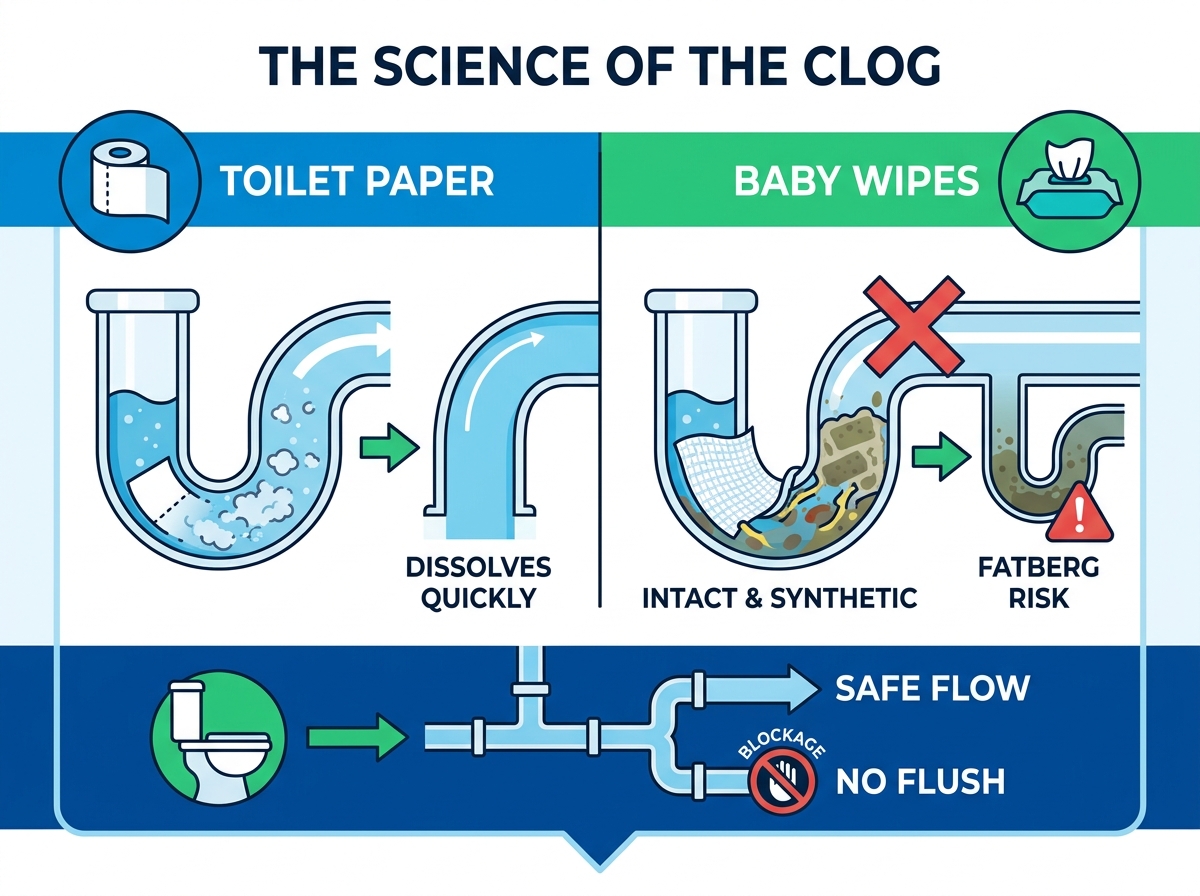
Zero Dissolvability: Baby wipes are reinforced with synthetic fibers (plastics/polyesters) designed for durability, meaning they do not break down in water like toilet paper.
"Flushable" is a Marketing Term: Independent testing consistently proves that wipes labeled "flushable" fail to disintegrate safely in residential and municipal plumbing.
High Risk of Severe Blockages: Flushed wipes act as a net, catching grease and debris to form rock-solid "fatbergs" that cause catastrophic sewage backups.
Immediate Action Required: If a wipe was recently flushed, specific DIY triage steps can prevent the clog from moving deeper into the main sewer line, but persistent signs of a blockage require professional hydro-jetting or augering.
To understand the danger, we must look at how materials interact inside a wet pipe. Standard toilet paper features a short-fiber construction. It absorbs water and rapidly loses structural integrity. The friction of the flush tears the paper into a harmless pulp. This pulp easily navigates bends and drops in the plumbing lines.
Conversely, manufacturers engineer Baby Wipes for extreme durability. They interlace synthetic plastics, such as polyester and polypropylene, into the fabric. You want them to withstand moisture and friction without tearing during use. Unfortunately, this exact durability turns them into a plumbing nightmare. They remain entirely intact as they travel through your drain.
You might wonder about wipes explicitly marketed as safe for plumbing. Consumer testing labs routinely evaluate these claims. The methodology typically involves agitating the wipes in water to simulate a toilet flush. The results are striking. While toilet paper dissolves in minutes, these supposedly safe wipes remain whole for hours or even days. They physically fit through the initial toilet trap. However, they fail to break down as they travel through the longer lateral lines connecting your home to the sewer.
We can summarize the mechanical differences in the comparison chart below.
Material Property | Standard Toilet Paper | Synthetic Wipes |
|---|---|---|
Primary Material | Short-fiber wood pulp | Polyester, polypropylene blends |
Water Breakdown Time | 1 to 3 minutes | Days, weeks, or never |
Tensile Strength | Extremely low when wet | High durability when wet |
Plumbing Risk Level | Minimal | Critical risk of clogs |
The problem extends far beyond your residential property line. It becomes a macro-level municipal crisis. When intact Baby Wipes enter the city sewer grid, they encounter household fats, oils, and greases (FOG). These wipes act as an indestructible net. They catch solidifying fats, hair, and other debris.
Over time, this accumulation hardens into massive, rock-solid structures known as fatbergs. Fatbergs block massive city sewer mains. They force untreated sewage backward into homes and streets. Municipalities spend millions of taxpayer dollars annually to manually excavate these blockages. Your single flushed wipe directly contributes to this costly structural gridlock.
Panic often sets in immediately after an accidental flush. However, a catastrophic clog rarely happens right away. A single wipe might travel several feet before finding a snag point. Common snag points include pipe imperfections, invasive tree roots, or mineral scale buildup.
Plumbers categorize the resulting blockage progression into three distinct stages. You must recognize these signs early.
This is your first warning sign. After a flush, water takes noticeably longer to empty from the bowl. You might also see the water level rise unusually high before slowly settling back to normal. The wipe is creating a partial obstruction. Water can still pass, but solids cannot. If you ignore this stage, the problem will rapidly worsen.
As the blockage grows, it alters the air pressure inside your plumbing system. Drains require proper ventilation to move water freely. The trapped wipe blocks this airflow. When you flush the toilet, you will hear distinct gurgling sounds coming from nearby fixtures. Listen closely to your bathtub or shower drain. Bubbling noises indicate trapped air fighting to escape the obstructed pipe.
This represents a severe plumbing emergency. The main sewer line is entirely blocked. Wastewater has nowhere to go but backward. You will notice water backing up into the lowest drains of the house. Look at basement floor drains, ground-level showers, or bathtubs. Blackwater intrusion introduces severe biohazards into your living space. Immediate professional intervention is non-negotiable at this stage.
If you realize your mistake as the bowl empties, you must take swift action. Proper triage can prevent the wipe from escaping into the deep lateral line. Follow these sequential steps carefully.
Stop Flushing Immediately: This is the most critical rule. Do not attempt to flush it down with additional water. Do not pour harsh chemical drain cleaners into the bowl. Standard household chemicals cannot dissolve synthetic plastics. They will merely generate intense heat. This heat can crack your porcelain toilet or damage older PVC pipes.
Retrieve the Flange Plunger: Standard cup plungers are meant for flat sink drains. You need a flange plunger. It features an extended rubber flap designed to seal a toilet trap.
Execute the Plunger Method: Press the plunger down gently to push the air out. Ensure you create a tight vacuum seal around the drain hole. Pull up sharply and forcefully. Your goal is to suck the wipe back up into the bowl. You do not want to force it deeper into the pipe.
Use a Closet Auger if Necessary: If plunging fails, you can try a closet auger. This specialized tool features a flexible cable and a hooked tip. Insert the tip into the trap and crank the handle. The hook can snag the fabric. Pull the auger out slowly to retrieve the item. Beware the risk of pushing the obstruction deeper if you lack experience.
Perhaps the wipe seemingly passed without immediate issue. You still need to remain vigilant. Monitor your plumbing closely for the next 48 hours. Watch the flush velocity carefully. Listen for any faint gurgling sounds in the adjacent shower drain. Limit your toilet paper usage during this window. If you notice any sluggishness, assume the wipe is lodged nearby.
Many homeowners hesitate to call a plumber due to budget concerns. You must accurately define the business problem here. A DIY fix gone wrong quickly becomes a massive liability. The financial difference between extracting a localized wipe and repairing a ruptured main sewer line is staggering.
If you experience persistent slow drains or any signs of backup, you must escalate the situation. Professional plumbers possess specialized equipment to resolve the issue safely.
Modern plumbers do not guess where the clog lives. They utilize high-resolution sewer camera inspections. They feed a waterproof camera down your drain to locate the exact position of the blockage. This eliminates unnecessary pipe excavation. The camera clearly reveals whether a mass of synthetic fibers is causing the issue.
Once they locate the problem, professionals deploy specific solutions based on severity.
Cable Snaking: Technicians use a heavy-duty motorized auger. It is best for minor, localized snags located near the toilet base or slightly into the branch line. The spinning head physically grabs the material for extraction.
Hydro-Jetting: Severe blockages require heavy artillery. Hydro-jetting involves blasting highly pressurized water through the pipe. It scours the pipe walls clean. It obliterates hardened fatbergs and flushes accumulated materials entirely out into the city main. It is the necessary solution for deep, stubborn clogs.
You might view hydro-jetting or camera inspections as expensive. However, you must weigh this against the alternative. Professional extraction is a necessary investment. It protects your property value. A raw sewage backup destroys flooring, ruins drywall, and requires expensive biohazard remediation. Hiring a professional proactively prevents these disastrous outcomes.
Prevention remains the most effective strategy. You can safeguard your pipes by establishing clear household rules and updating your bathroom setup.
The simplest solution involves changing bathroom habits. Place a small, hands-free trash can next to every toilet in your home. Use this receptacle exclusively for makeup pads, hygiene products, and Baby Wipes. Removing the temptation to flush them drastically reduces your risk of a plumbing emergency. Consider purchasing a trash can with a tight-fitting lid to manage odors effectively.
Homes operating on private septic tanks face even greater risks. Septic systems rely on a delicate balance of bacteria to break down organic solid waste. Synthetic fibers completely bypass this biological breakdown process.
When you flush these items, they settle at the bottom of the septic tank permanently. They artificially inflate the solid sludge layer. This leads to premature tank fill-ups. It forces you to schedule expensive pumping services much more frequently. Worse, these durable fabrics can migrate into the drain field piping. Once they clog the drain field, you face catastrophic system failure. Replacing a drain field often requires extensive yard excavation.
You cannot protect your pipes alone. You must educate everyone who uses your bathrooms. Frame the "Do Not Flush" rule clearly for children. Remind them that only toilet paper belongs in the bowl. Consider placing a small, polite sign in guest bathrooms. Many guests genuinely believe the "flushable" marketing claims. A gentle reminder protects your home from well-meaning mistakes.
The final verdict is absolute. The minor convenience of flushing these products is vastly outweighed by the severe structural risks. You expose your home to slow drains, localized clogs, and devastating main line sewage backups.
Your best defense against plumbing emergencies is strict skepticism of any "flushable" labeling. Maintain a zero-tolerance policy for non-dissolvable materials in your pipes.
If you suspect an accidental flush occurred, monitor your drain speed closely. Act immediately if you notice sluggish performance. Schedule a non-invasive camera inspection with a licensed plumber before a minor snag evolves into a costly backup.
A: A single flush might pass through safely, but it represents a massive gamble. It only takes one snag on a pipe burr or small tree root to start a major blockage. Once caught, it acts as a net for other debris. Do not repeat the mistake, and monitor your drains closely for the next few days.
A: No. All wet wipes pose the exact same plumbing risks, regardless of the target demographic. Whether marketed for infants, adults, or makeup removal, they rely on strong synthetic fibers. They will not dissolve in your pipes. Always dispose of them in a trash receptacle.
A: No. Synthetic fibers are completely impervious to standard household drain chemicals. Pouring bleach or caustic cleaners will not break down the plastic webbing. These chemicals will only generate dangerous heat, potentially cracking your porcelain toilet or degrading older pipes. Never use chemicals for fabric-based clogs.
A: Yes, absolutely. Plumbers easily identify the culprit during extraction. The materials are physically pulled out whole via mechanical augers. Alternatively, they are captured clearly on high-resolution sewer inspection cameras. The durable nature of the fabric means the evidence remains perfectly intact underground.


